
Introduction — The Growing Opportunity for Custom Smartwatches in 2026
The global smart wearable market is projected to reach USD 118.89 billion in 2026, with smartwatches commanding over 60% of that revenue, according to the Mordor Intelligence Smart Wearable Market Report. For brands, retailers, and enterprise buyers, the window to launch a differentiated custom smartwatch is wide open — but only if you partner with the right manufacturing team.
Whether you are a startup building your first wearable brand or an established company expanding into health-focused IoT products, understanding how custom smartwatch manufacturing works — and what to look for in an OEM or ODM partner — is the most important decision you will make this year. The custom smartwatch market rewards brands that combine thoughtful product design with reliable, scalable production.
This guide walks you through the full process: the difference between OEM and ODM models, how a custom smartwatch factory operates step by step, why China remains the dominant sourcing destination for smartwatch manufacturing, which certifications you need for global markets, and how to evaluate suppliers before committing to production.
OEM vs. ODM: What Is the Difference for Smartwatch Brands?
Before you contact any custom smartwatch manufacturer, you need to decide which engagement model fits your business. The smartwatch OEM ODM distinction shapes everything from timeline and cost to how much creative control you retain over the final product.
Smartwatch OEM — Private Label with Proven Designs
In an OEM arrangement, you select from the manufacturer’s existing product designs and customize the branding elements — logo, packaging, watch faces, and sometimes strap materials or colorways. A private label smartwatch manufacturer handles the engineering; you focus on marketing and distribution.
OEM is ideal when: you need to launch quickly, your budget is limited, and your differentiation strategy centers on branding rather than hardware innovation. Minimum order quantities for OEM projects typically start at 500–1,000 units, making this model accessible for custom smartwatch wholesale buyers and smaller brands entering the market for the first time.
Smartwatch ODM — From Concept to Market-Ready Product
ODM goes further. You bring a product concept — a target user persona, desired features, or an industrial design sketch — and the custom smartwatch manufacturer’s R&D team develops the hardware, firmware, and software to bring it to life. The result is a product that is uniquely yours, with custom tooling and proprietary design elements.
ODM is ideal when: you want a differentiated custom smartwatch that competitors cannot easily replicate, you have specific sensor or connectivity requirements, or you are building a long-term brand identity around unique hardware design.
Choosing Between OEM and ODM for Your Custom Smartwatch Brand
| Factor | OEM (Private Label) | ODM (Custom Design) |
|---|---|---|
| Time to Market | 4–8 weeks | 3–6 months |
| Development Cost | Low (branding only) | Moderate to high (tooling, R&D) |
| Design Uniqueness | Shared platform | Fully proprietary |
| MOQ | 500–1,000 units | 1,000–3,000+ units |
| Best For | Quick market entry | Long-term brand building |
Many brands start with a smartwatch OEM ODM approach to validate demand, then transition to full ODM development once they have market traction and customer feedback to inform a custom design.
The Custom Smartwatch Manufacturing Process Step by Step
Understanding the production workflow helps you set realistic timelines and communicate effectively with your custom smartwatch factory.
Step 1: Product Definition and Specification
Every successful custom smartwatch project starts with a detailed product requirements document (PRD). This covers target market, key features (health sensors, GPS, cellular, NFC payments), display type (AMOLED, LCD), battery life targets, connectivity options, and water resistance rating. A thorough PRD prevents costly changes later in the process and sets clear expectations between your brand and the smartwatch manufacturer China partner you choose.
Step 2: Design, Prototyping, and Validation
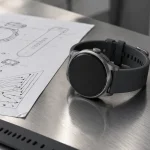
Industrial designers create 3D renderings and mechanical drawings. Hardware engineers select the chipset (commonly from MediaTek, Realtek, or Qualcomm), sensors, and communication modules. Firmware teams begin developing the embedded software and companion app. Multiple prototype iterations follow — typically 2–4 rounds of engineering validation testing (EVT), design validation testing (DVT), and production validation testing (PVT) before the custom smartwatch design is frozen for mass production.
Step 3: Mass Production and Quality Assurance
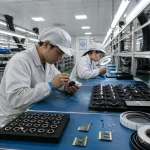
Once the design is locked, the custom smartwatch factory sets up production lines, sources components in bulk, and begins mass manufacturing. Reputable manufacturers implement multi-stage quality control: incoming inspection (IQC), in-process quality checks (IPQC), and final quality assurance (FQA/OBA). A well-run factory will provide real-time production updates and allow third-party inspections before shipment.
Why Source from a Smartwatch Manufacturer in China?
China — and Shenzhen in particular — remains the world’s dominant hub for smart wearable manufacturing. IDC forecasts global smartwatch volumes at 159.7 million units in 2026, and the vast majority of those devices are designed and assembled in Chinese factories, according to IDC’s Worldwide Wearable Device Tracker.
Shenzhen’s Wearable Manufacturing Ecosystem
Shenzhen’s electronics supply chain is unmatched. Component suppliers, PCB fabricators, display manufacturers, sensor specialists, and assembly factories are all within a short drive of each other. This concentration means faster iteration cycles, lower logistics costs, and the ability to source rare or specialized components that would be difficult to procure elsewhere. Any smartwatch manufacturer China based in this region benefits from direct access to this ecosystem.
Cost Advantages and Supply Chain Depth
A smartwatch manufacturer China partner offers labor cost advantages, but the bigger benefit is supply chain maturity. The Shenzhen ecosystem supports everything from small-batch prototyping to million-unit production runs. For buyers pursuing custom smartwatch wholesale at scale, this means competitive unit pricing without sacrificing component quality or production flexibility.
The region also hosts dedicated wearable research institutes and a deep talent pool of firmware, hardware, and industrial design engineers — resources that directly translate into better products for your brand. When evaluating a custom smartwatch manufacturer, look for one that leverages these regional advantages fully.
Certifications and Compliance for Global Markets
Every wireless wearable must meet the regulatory requirements of its target market before it can be legally sold. Working with an experienced OEM smartwatch supplier ensures these certifications are built into the development timeline rather than treated as an afterthought.
Key Certifications by Region
| Market | Required Certifications | What It Covers |
|---|---|---|
| United States | FCC Part 15 | RF emissions, Bluetooth/Wi-Fi compliance, SAR testing |
| European Union | CE (RED + EMC + LVD) | Radio equipment, electromagnetic compatibility, electrical safety |
| Global | RoHS / REACH | Restriction of hazardous substances in materials |
| Japan | TELEC / MIC | Radio law compliance for wireless devices |
| South Korea | KC Certification | Electromagnetic waves and electrical safety |
If your custom smartwatch includes health monitoring features (heart rate, blood oxygen, ECG), additional considerations around medical device classification may apply in certain markets. An experienced OEM smartwatch supplier will flag these requirements early in the project and guide you through the certification process.
Customization Options — What Can You Personalize?
Modern custom smartwatch manufacturing supports deep customization across three layers:
- Hardware: Case materials (aluminum alloy, stainless steel, titanium, plastic), display size and type, sensor suite (heart rate, SpO2, ECG, temperature), strap material and design, battery capacity, water resistance rating (IP67, IP68, 5ATM), and connectivity modules (Bluetooth, Wi-Fi, GPS, LTE, NFC).
- Software: Custom firmware, branded watch faces, personalized UI/UX design, companion mobile app development, and integration with your existing backend or cloud platform. A capable custom smartwatch factory will offer full-stack software development.
- Branding: Logo engraving or printing, custom packaging design, branded accessories, personalized boot animations, and tailored user manuals. For private label programs through a private label smartwatch manufacturer, this layer alone can create a compelling brand experience.
The depth of customization depends on your engagement model — OEM projects typically customize branding and software, while ODM projects through a smartwatch OEM ODM partner can modify every hardware and software element.
How to Evaluate and Select an OEM Smartwatch Supplier
Not every factory that claims to build smartwatches has the capability to deliver a product your customers will trust. Here are the criteria that matter most when selecting a custom smartwatch manufacturer:
- R&D capability: Does the supplier have an in-house engineering team for hardware, firmware, and app development? A strong R&D team (50+ engineers is a good benchmark) reduces dependency on third-party design houses and accelerates iteration.
- Certifications and compliance track record: Look for ISO 9001 quality management certification, experience with FCC/CE/RoHS testing, and a clean-room or dust-free production environment at the custom smartwatch factory.
- Production capacity and scalability: Can the factory handle your initial order and scale up as demand grows? Ask about monthly output capacity and typical lead times for both OEM and ODM projects.
- Client portfolio and references: A reputable private label smartwatch manufacturer should be willing to share case studies or connect you with existing clients. Look for experience in your target market segment.
- Communication and project management: Time zone alignment, English-speaking project managers, and transparent production reporting make a significant difference in project outcomes.
Conclusion — Launching Your Custom Smartwatch Brand in 2026
The smart wearable market is growing at over 16% annually, and smartwatches remain the single largest category within it. For brands willing to invest in thoughtful product design and reliable manufacturing, the opportunity is substantial.
The key is choosing the right partner — a custom smartwatch manufacturer that combines strong R&D, certified manufacturing processes, and the flexibility to support your brand from first prototype through mass production and beyond. Whether you start with a private label OEM program or go straight to full ODM development, the smartwatch manufacturer China ecosystem offers the scale, speed, and technical depth to bring your vision to market.
For teams ready to explore what a dedicated smart wearable partner can deliver, WorldWell Tech offers end-to-end OEM and ODM services across smartwatches, fitness trackers, smart rings, and AI-enabled wearables — backed by a 100+ person R&D team and ISO 9001-certified production facilities. Whether you need a custom smartwatch for a niche market or custom smartwatch wholesale volumes for global distribution, their team can guide you from concept to delivery.