
Table of Contents
- Why Smart Watch Sales Are Surging — The Market at a Glance
- What to Evaluate Before You Source Smartwatches
- OEM vs. ODM: Choosing the Right Manufacturing Model
- How to Vet a Smart Watch Supplier
- Certification Requirements by Target Market
- Smart Watch Sourcing Mistakes to Avoid
- Your Smart Watch Purchase Checklist
Why Smart Watch Sales Are Surging — The Market at a Glance
The global smartwatch market was valued at USD 38.53 billion in 2025 and is projected to reach USD 142.04 billion by 2034, growing at a CAGR of 15.68% (Fortune Business Insights, 2025). With over 562 million active users worldwide — a figure expected to surpass 740 million by 2029 — smart watch sales represent one of the fastest-expanding categories in consumer electronics today.
For B2B buyers — distributors, e-commerce retailers, brand owners, and corporate procurers — this growth translates into real revenue opportunity. But capturing that opportunity requires more than finding a smart watch for sale at the lowest unit cost. It demands a structured sourcing approach that balances quality, compliance, customization, and margin.
North America alone accounts for nearly 39% of global smartwatch revenue, while Asia-Pacific leads in unit volume. Smart watch sales growth is fueled by rising health consciousness, expanding IoT ecosystems, and the mainstreaming of wearable technology across age groups and income levels. Whether you are looking to buy smartwatch inventory for a new retail line or scale an existing brand, understanding these market dynamics is the first step toward profitable sourcing.
This guide walks you through every critical decision point in the smart watch purchase process, from market positioning to supplier evaluation, so you can source confidently and profitably in a market where smart watch sales continue to accelerate year over year. If you want to buy smartwatch products that move quickly off shelves, the insights below will help you make smarter sourcing decisions.
What to Evaluate Before You Source Smartwatches
Before you commit to a bulk smartwatch sale order, you need clarity on three fundamentals: who your end customer is, what features they actually want, and what price point delivers healthy margins in your market. Skipping this step is the single most common reason B2B buyers end up with unsold inventory.
Define Your Target Customer
Different buyer segments need different products. A fitness-focused consumer in North America expects GPS, heart-rate monitoring, and seamless app integration. A price-sensitive buyer in Southeast Asia may prioritize basic notifications, long battery life, and an attractive retail price under USD 30.
- Health-conscious consumers: Prioritize heart rate, SpO2, sleep tracking, and fitness modes
- Business professionals: Value premium materials (alloy cases, leather straps), AMOLED displays, and Bluetooth calling
- Budget and mass-market buyers: Focus on essential notifications, step counting, and 5–7 day battery life
- Women’s segment: Smaller case diameters (35–40mm), slim profiles, menstrual tracking features
Understanding your target customer before you buy smartwatch stock ensures you select models that actually sell, rather than models that simply look good on a spec sheet. Smart watch sales performance is directly tied to how well the product matches the end user’s expectations.
Feature Priorities by Region
| Region | Top-Requested Features | Average Retail Sweet Spot |
|---|---|---|
| North America | GPS, NFC payments, health sensors, app ecosystem | $80–$250 |
| Europe | CE compliance, premium build, sleep and stress tracking | $60–$200 |
| Southeast Asia | Long battery, BT calling, affordable pricing | $15–$50 |
| Middle East | Luxury design, AMOLED, brand perception | $40–$150 |
| Latin America | Basic fitness tracking, durability, low cost | $20–$60 |
These regional preferences directly shape which smart watch sales channels perform best. A smartwatch sale targeting European retailers, for instance, must lead with compliance documentation and build quality, while the same product pitched to Southeast Asian distributors should emphasize battery life and competitive FOB pricing. Buyers who align their product selection with regional demand see significantly higher sell-through rates.
Price Tiers and Margin Expectations
Understanding the typical cost structure helps you set realistic margins when you buy smartwatch inventory for resale:
- Budget tier (USD 8–18 FOB): Basic LCD, Bluetooth notifications, plastic case. Retail at $20–$45. Typical margin: 40–60%.
- Mid-range (USD 18–35 FOB): AMOLED display, alloy case, health sensors, BT calling. Retail at $50–$120. Typical margin: 50–70%.
- Premium (USD 35–60+ FOB): Full GPS, NFC, premium materials, advanced health suite. Retail at $120–$300+. Typical margin: 60–80%.
The mid-range tier currently offers the best balance of margin and market demand for most B2B buyers entering the smart watch sales space. AMOLED displays and health sensors have become table-stakes features even at moderate price points, so buyers should not compromise on these components to save a few dollars per unit. A well-priced smart watch for sale in the mid-range segment consistently outperforms both ultra-budget and ultra-premium options in overall unit volume.
OEM vs. ODM: Choosing the Right Manufacturing Model
When sourcing smartwatches for your brand, you will encounter two primary manufacturing models. The choice between them affects your minimum order quantity, unit cost, time to market, and degree of product differentiation — all of which influence your smart watch sales outcomes.
| Factor | OEM | ODM |
|---|---|---|
| Design ownership | Your custom industrial and hardware design | Supplier’s existing platform, your branding |
| MOQ | Typically 500–3,000 units | As low as 50–200 units |
| Unit cost | Higher (NRE and tooling amortized) | Lower (shared platform) |
| Time to market | 60–120 days | 15–45 days |
| Best for | Established brands seeking differentiation | New sellers, market testers, e-commerce resellers |
Many successful buyers start with ODM to validate demand, then transition to OEM once volumes justify the investment. This staged approach reduces upfront risk while building toward stronger margins and brand identity over time.
For buyers evaluating a smartwatch sale from an ODM supplier, the key questions to ask are: How many customization options does the base platform support? Can the supplier accommodate logo placement, custom watch faces, unique packaging, and branded companion apps? These seemingly small details often make the difference between a generic product and one that builds customer loyalty and repeat smart watch sales.
Note: when searching for smartwatchs online, buyers often encounter mixed-quality listings that blur the line between OEM and ODM offerings. Always clarify the exact model and customization scope with your supplier before committing to a smart watch purchase. The smartwatchs market is crowded, and distinguishing genuine manufacturers from trading companies is essential for consistent quality.
How to Vet a Smart Watch Supplier
Whether you are browsing a smart watches sale listing on a B2B platform or attending a trade fair, supplier evaluation follows the same core criteria. A systematic vetting process protects you from quality failures, shipment delays, and compliance headaches down the line.
Certifications and Compliance
A reliable manufacturer should hold — and readily provide copies of — relevant certifications for your target markets. At minimum, expect:
- CE and RoHS for European Union markets
- FCC Part 15 for the United States
- ISO 9001 for quality management systems
- IP68 waterproof testing reports for fitness-oriented models
Always request the actual certificate document, not just a claim on a product page. Counterfeit certificates are more common than most buyers realize, and customs authorities in the EU and US are increasingly strict about verification. A supplier who hesitates to share documentation is a supplier you should avoid when planning smart watch sales in regulated markets.
Production Capability and Lead Times
Ask specifically about:
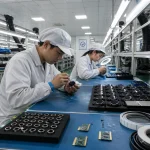
- Monthly production capacity (a mid-size factory produces 50,000–200,000 units per month)
- Standard lead time for sample orders versus mass production
- Component sourcing — do they use branded sensors (e.g., Infineon, Bosch) or generic alternatives?
- Their defect rate target (reputable factories aim for under 1%)
These details matter because they directly affect your ability to fulfill smart watch sales commitments on time. A supplier who cannot meet your delivery schedule will cost you far more in lost customers than the few dollars per unit you might save by choosing a cheaper alternative. Consistent supply is the backbone of sustainable smart watch sales growth.
Sampling and Quality Control
Never place a bulk order without testing samples first. A proper sampling process includes:
- Functional testing: Verify all sensors, Bluetooth connectivity, display quality, and battery life claims
- Build quality inspection: Check case finish, strap attachment, button feel, and water resistance
- App integration: Test the companion app for stability, data accuracy, and user experience quality
- Drop and stress tests: Simulate real-world usage conditions
Request at least three to five samples from any supplier before you buy smartwatch units in volume. This small investment prevents costly mistakes and gives you confidence that the product you receive matches the product you ordered — a critical step for anyone serious about building long-term smart watch sales.
Certification Requirements by Target Market
Importing smartwatches without proper certification can result in customs holds, fines, or product recalls. Here is a quick reference for the most common destination markets:
| Market | Required Certifications | Key Standards |
|---|---|---|
| European Union | CE (RED Directive), RoHS, WEEE | EN 300 328, EN 301 489, EN 62368-1 |
| United States | FCC Part 15 | 47 CFR Parts 15B and 15C |
| Japan | PSE, TELEC (MIC) | Electrical Appliance and Material Safety Act |
| India | BIS, WPC | IS 13252, Wireless Planning rules |
| Middle East (UAE) | TEDRA, TRA | UAE.S GSO standards |
Verify current requirements with your compliance partner before each shipment, as regulations evolve — particularly around cybersecurity requirements in the EU, which became mandatory under the RED delegated act from August 2025. Any smartwatch sale into European markets must now account for these updated digital safety standards. Non-compliance can halt smart watch sales at the border and damage your reputation with retail partners.
Smart Watch Sourcing Mistakes to Avoid
Even experienced buyers make costly errors. Here are the most common pitfalls when navigating a smartwatch sale process:
- Choosing on price alone: The cheapest unit often uses inferior sensors, unbranded chipsets, and lacks proper RF shielding — leading to high return rates that destroy your margin and reputation. Smart watch sales built on low-quality products rarely sustain long-term growth.
- Skipping sample validation: Product photos and spec sheets can be misleading. Always test physical samples under real conditions before committing to volume.
- Ignoring certification costs: If your supplier does not already hold certifications for your market, budget USD 3,000–$10,000 and 4–8 weeks to obtain them.
- Over-customizing on the first order: Custom molds and unique PCB layouts require high MOQs. Start with ODM customization (logo, color, packaging) before committing to full OEM.
- Neglecting after-sales terms: Clarify warranty policies, defect replacement procedures, and firmware update support before signing a purchase order. Strong after-sales support is what turns one-time buyers into repeat smart watch sales channels.
- Underestimating packaging costs: Retail-ready packaging — including manuals, charging cables, and branded boxes — can add USD 1–3 per unit. Factor this into your landed cost calculation before finalizing any smart watch purchase.
Avoiding these mistakes is what separates profitable smart watch sales operations from those that struggle with returns, compliance issues, and thin margins. Every mistake on this list has been made by real buyers — learn from their experience rather than paying for it yourself.
Your Smart Watch Purchase Checklist
Use this checklist before finalizing any smart watch purchase order:
- Target market and customer segment clearly defined
- Feature set aligned with regional preferences and price point
- OEM vs. ODM model selected based on volume and brand strategy
- Supplier verified: factory audit, certifications confirmed, references checked
- Samples received and tested for function, build quality, and app performance
- Certification requirements for destination market identified and confirmed
- Payment terms, warranty, and after-sales support agreed in writing
- Packaging, labeling, and compliance marks reviewed and approved
Sourcing smartwatches profitably comes down to preparation and due diligence. The market is large and growing fast — but the buyers who win are those who treat every smart watch purchase as a strategic decision, not a commodity transaction. Smart watch sales success belongs to buyers who invest time in research, validation, and relationship-building with their suppliers.
For buyers ready to explore a curated range of AMOLED smartwatches with OEM and ODM flexibility, our smart watch collection covers the mid-to-premium segments with IP68 waterproofing, health monitoring suites, and factory-direct pricing from Guangdong, China. Whether you are looking to buy smartwatch products for a new market or expand an existing line, starting with a reliable factory-direct source is the foundation of profitable smart watch sales.