
Why the Right Smart Wearable Tech Factory Matters
The global market for smart wearable tech reached an estimated $86.65 billion in 2025 and is projected to grow at nearly 20% CAGR through the next decade. Behind every successful wearable brand sits a smart wearable tech factory that can turn concepts into certified, shippable products at scale. For wearable technology manufacturers, choosing the right production partner is the single most consequential decision a brand makes — it determines product quality, time to market, and regulatory compliance across every destination.
Yet not every factory that claims to produce smart wearable tech has the design depth, certification infrastructure, or quality systems to deliver consistently. This guide walks you through what a serious smart wearable technology production operation looks like — from our own capabilities to the certifications that matter — so you can evaluate any wearable tech companies partner with confidence.
What this guide covers:
- Our Production Capabilities at a Glance
- Wearable Technology Design: Engineering Every Detail
- Certifications & Compliance: Meeting Global Standards
- Evaluating Wearable Tech Companies: A Buyer’s Checklist
- How to Start Your Project With Us
Our Production Capabilities at a Glance
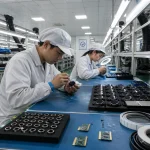
As a vertically integrated smart wearable tech factory based in Guangdong, China, we handle every stage of the product lifecycle: industrial design, hardware engineering, firmware and app development, tooling, mass production, and global logistics. This section outlines what we build, how we build it, and the engagement models we offer to wearable technology manufacturers worldwide.
Product Categories We Manufacture
Our production lines cover the four fastest-growing segments in smart devices and wearables:
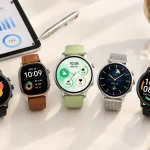
- Smart watches — AMOLED and LCD displays, Bluetooth calling, health monitoring (heart rate, SpO2, blood pressure), IP68 and 5ATM waterproof ratings
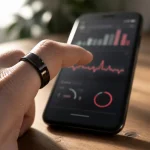
- Smart rings — Stainless steel and ceramic bodies, wireless charging, 5–10 day battery life, continuous health tracking
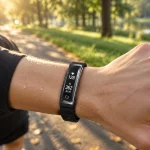
- Fitness trackers — Alloy and polymer cases, multi-sport modes, sleep and step tracking, magnetic charging
- AI smart glasses — Real-time translation, integrated cameras, audio playback, lightweight frames
Each category shares a common production philosophy: private mold manufacturing for design differentiation, rigorous in-line quality control, and full OEM/ODM customization. As one of the leading wearable technology manufacturers in the region, we support brands from concept to global shipment.
OEM vs. ODM: Choosing the Right Model
Buyers typically engage our smart wearable tech factory under one of two manufacturing models. The choice depends on your design maturity, timeline, and IP strategy:
| Aspect | OEM (Your Design, Our Production) | ODM (Our Design, Your Brand) |
|---|---|---|
| Design ownership | Client provides industrial design and specs | Factory provides existing designs; client customizes branding, colors, packaging |
| Development time | Longer — tooling and validation from scratch | Shorter — proven platforms, faster iteration |
| Best for | Brands with established design teams seeking full IP control | Startups, retailers, or brands expanding into wearables quickly |
| MOQ flexibility | Higher — custom tooling amortization | Lower — existing molds reduce upfront cost |
Many clients start with ODM to validate market demand, then transition to OEM once volumes justify custom tooling. Among wearable tech companies that serve global brands, this hybrid approach is the most common path to scale.
From Concept to Mass Production: The Development Workflow
Every wearable device design project at our factory follows a structured four-phase workflow designed to minimize risk and maximize speed to market:
- Define — Product requirements, target market, feature set, certification needs, and brand guidelines are documented in a joint product specification.
- Prototype — Industrial design mockups, engineering validation samples (EVT), and design validation samples (DVT) are built and tested iteratively.
- Validate — Production validation tests (PVT), certification submissions, and pilot runs confirm that the wearable device design is ready for scale manufacturing.
- Deliver — Mass production, final quality inspection, packaging, and global shipment with full logistics support.
This workflow ensures that every smart wearable technology product leaving our facility has been validated at multiple quality gates before it reaches your warehouse or end customer. Our quality control process follows a four-stage inspection framework: Incoming Quality Control (IQC) for raw materials, In-Process Quality Control (IPQC) during assembly, Final Quality Control (FQC) before packaging, and Outgoing Quality Control (OQC) prior to shipment.
Wearable Technology Design: Engineering Every Detail
Design is where wearable smart tech separates commodity gadgets from products people actually wear every day. Our in-house wearable technology design team covers three disciplines that must work in concert to deliver a competitive product.
Industrial Design & Ergonomics
A wearable that looks good on a render but feels awkward on a wrist will fail in the market. Our industrial designers work with form factor, material selection, surface finishing, and ergonomic fit from day one. We prototype in 3D printing and CNC to test fit and feel before committing to injection molds — reducing the cost of late-stage design changes that can delay launches by weeks. This wearable technology design approach ensures every product is both visually appealing and comfortable for all-day wear.
Hardware & Sensor Integration
The hardware team handles PCBA design, sensor selection (optical heart rate, accelerometers, gyroscopes, temperature), antenna tuning, and power management. For smart rings and compact fitness trackers, miniaturization is the core engineering challenge — fitting reliable sensors and a multi-day battery into a sub-10-gram form factor requires careful tradeoffs between component selection, firmware power optimization, and mechanical design. Our engineers have delivered production-ready wearable device design solutions for devices weighing as little as 6 grams with 7-day battery life.
Firmware, App & Algorithm Development
Hardware alone doesn’t deliver value — the software stack does. Our firmware engineers develop RTOS-based code, Bluetooth Low Energy (BLE) communication protocols, and sensor fusion algorithms for health metrics. The companion mobile app for iOS and Android is developed in parallel, with support for white-label branding, custom UI themes, and over-the-air firmware updates. This integrated approach to smart wearable technology development ensures hardware and software are optimized together, not bolted on after the fact.
Certifications & Compliance: Meeting Global Standards
Certifications are non-negotiable in the smart wearable tech industry. A device that ships without the right marks faces customs seizure, marketplace removal, or legal liability. Here’s how our factory approaches compliance across major markets.
Safety & EMC Standards
For consumer wearables (non-medical), the applicable safety standard is IEC/UL 62368-1, which covers audio/video, information and communication technology equipment. Electromagnetic compatibility (EMC) testing ensures the device doesn’t interfere with — and isn’t susceptible to — other electronic equipment. According to UL’s wearable technology testing framework, all connected wearables require EMC and radio frequency regulatory testing or certification before they can be sold in most major markets.
Wireless & Regulatory Certifications
Because virtually every smart wearable tech product uses Bluetooth or Wi-Fi, wireless certifications are mandatory for legal market access:
- FCC (USA) — Federal Communications Commission authorization for radio frequency emissions
- CE (EU) — Conformité Européenne marking, covering the Radio Equipment Directive (RED) for wireless devices
- RoHS — Restriction of Hazardous Substances compliance for all materials used in the device
- Bluetooth SIG — Protocol qualification required to use Bluetooth branding and ensure interoperability
We manage the full certification submission process on behalf of our clients, including test sample preparation, lab coordination, documentation, and follow-up until marks are granted. This is one of the key advantages of working with established wearable technology manufacturers who understand global compliance requirements.
Quality Management Systems
Beyond product-level certifications, the factory’s quality management system itself must meet recognized standards. ISO 9001 establishes the baseline for consistent manufacturing quality across production runs. For brands targeting the medical or health-monitoring segment, ISO 13485 adds the quality management requirements specific to medical device manufacturing — a growing necessity as smart devices and wearables blur the line between consumer wellness and clinical-grade monitoring.
As of early 2026, the FDA’s Quality Management System Regulation (QMSR) has incorporated ISO 13485 by reference, meaning that even US-market wearables with health features now align with the same international quality framework. This convergence simplifies compliance for factories that serve both markets.
Evaluating Wearable Tech Companies: A Buyer’s Checklist
Not every factory that lists “wearable manufacturing” on its website can deliver at the level your brand requires. When evaluating wearable tech companies as potential partners, use this checklist to avoid costly mistakes:
| Criteria | What to Verify | Why It Matters |
|---|---|---|
| Design capability | In-house ID, hardware, and firmware teams | Reduces handoff errors and accelerates iteration cycles |
| Certifications held | ISO 9001, CE, FCC, RoHS at minimum | Ensures products can legally ship to target markets |
| Private mold capability | Own mold shop or verified partner | Protects design IP and enables product differentiation |
| Quality control process | IQC → IPQC → FQC → OQC workflow | Catches defects at every production stage, not just final inspection |
| Scalability | Production capacity and lead times | Ensures the smart wearable tech factory can grow with your brand |
| After-sales support | Warranty handling, firmware updates, spare parts | Protects your brand reputation long after the initial shipment |
Factories that can check every box consistently are rare — and they’re the ones that become long-term strategic partners rather than one-off transactional vendors.
How to Start Your Project With Us
Whether you’re launching a new smartwatch line, expanding into smart rings, or exploring AI-enabled smart glasses, the first step is a conversation. Share your product concept, target market, and volume expectations — we’ll respond with a feasibility assessment, timeline estimate, and pricing structure within 48 hours.
You can explore our current product portfolio to see the full range of smart wearable tech platforms available for ODM customization, or reach out directly to discuss a fully custom OEM build. Our team supports brands at every stage — from first-time startups entering the wearable market to established companies scaling into new product categories.
The smart wearable tech factory you choose becomes an extension of your brand. Make sure it’s one that invests in the design depth, certification rigor, and quality systems your product deserves. Request a quote today and let’s build your next wearable product together.