
Table of Contents
A fitness tracker with calories burned has become one of the most practical tools for anyone who wants to take control of their health, fitness, and weight management goals. Whether you are training for a marathon, managing a weight-loss plan, or simply curious about how many calories your morning jog actually burns, a fitness tracker with calories burned promises real-time insight into your energy expenditure. But beyond the numbers on the screen, how much do you really know about how these calorie estimates are calculated — and how to use them effectively? This guide breaks down the science, the limitations, and the strategies that turn raw calorie data from a fitness tracker with calories burned into a genuinely smarter workout routine.
What Is a Fitness Tracker with Calories Burned?
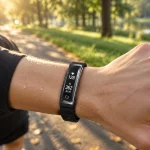
A fitness tracker with calories burned is a wearable device — typically a wristband or smartwatch — that estimates the energy you expend throughout the day using a combination of sensors, personal data, and algorithms. Modern devices go far beyond simple step counting. A quality calorie and activity tracker will monitor your heart rate, detect specific exercises, track sleep quality, and even estimate your basal metabolic rate (BMR) to give you a comprehensive picture of daily energy output.
These devices serve a wide range of users. Recreational athletes use a workout and calorie tracker to fine-tune training intensity. People pursuing weight management rely on a weight loss activity tracker to stay aware of their energy balance. Corporate wellness programs distribute them to employees as part of health initiatives. Whatever the use case, the core value proposition of a fitness tracker with calories burned is the same: making the invisible visible by turning movement into measurable data.
The global fitness tracker market was valued at approximately USD 78.78 billion in 2025 and is projected to reach USD 362.96 billion by 2034, growing at a CAGR of 18.50 percent. This explosive growth reflects how deeply consumers and organizations now rely on wearable technology for health monitoring and fitness optimization.
How Does a Fitness Tracker Calculate Calories Burned?
Understanding how your fitness tracker with calories burned arrives at a number helps you interpret it wisely. The calculation is never a direct measurement — it is an algorithm-driven estimate built from multiple data streams. A well-designed calorie and activity tracker combines hardware sensors, user profile data, and metabolic models to produce its estimates.
Key Sensors and Data Inputs
At the hardware level, a fitness tracker relies on several sensors to capture movement and physiological signals. An accelerometer detects motion in three axes, allowing the device to count steps and estimate activity intensity. A gyroscope adds rotational data, improving the accuracy of activity recognition — distinguishing between walking, cycling, and weightlifting, for example. Many devices also include a GPS receiver that tracks distance and pace during outdoor activities.
On top of these motion sensors, the device needs your personal profile: age, gender, height, and weight. These inputs feed into established metabolic equations to estimate your basal metabolic rate — the calories your body burns at rest. The fitness tracker calories figure you see each day is typically the sum of your BMR and the active calories burned through movement and exercise. This dual-component approach is what separates a modern fitness tracker with calories burned from a basic pedometer.
The Role of Heart Rate Monitoring
Heart rate monitoring is the single biggest accuracy upgrade in modern calorie tracking. Optical heart rate sensors use a technique called photoplethysmography (PPG) — light-based measurement of blood flow at the wrist — to give the device a real-time read on how hard your cardiovascular system is working.
When a smart watch calorie tracker combines heart rate data with your personal profile and motion sensors, the calorie estimate becomes significantly more personalized. Two people walking at the same speed may burn very different amounts of energy depending on their fitness level, and heart rate captures that difference. This is why a fitness tracker with calories burned and continuous heart rate monitoring consistently outperforms step-only devices in energy expenditure estimation.
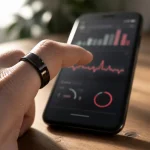
Most companion apps — the fitness and calorie tracker app that pairs with your device — use this combined data to break your day into zones: sedentary, light activity, moderate activity, and vigorous activity. Each zone carries a different metabolic multiplier, which is why a 30-minute run registers far more calories than 30 minutes of desk work, even though the step count might be similar.
Understanding Calorie Accuracy: What the Research Shows
Here is the honest truth: no consumer wrist-worn device measures calorie burn with clinical precision. According to a landmark 2017 Stanford University study, while six of seven wearables tested measured heart rate within 5 percent accuracy, none measured energy expenditure well. Even the most accurate device was off by an average of 27 percent, and the least accurate deviated by 93 percent.
A 2020 systematic review published in JMIR mHealth and uHealth, which analyzed 65 studies across 14 outcomes, confirmed this pattern. For energy expenditure, the mean absolute percentage error (MAPE) exceeded 30 percent across all brands tested. In other words, the calorie number on your calorie track watch is a directional estimate, not a laboratory measurement.
This does not make the device useless — it means you need to use it correctly. Think of the calorie figure from your fitness tracker with calories burned as a relative indicator rather than an absolute truth. If your activity tracker for calories burned shows that Tuesday’s workout burned significantly more than Monday’s, that comparison is meaningful even if the exact number is imprecise. The trends and relative differences are where the real value lies.
How to Use a Calorie Tracker to Transform Your Workout
Knowing the limitations actually makes you a smarter user. Here is how to turn calorie data from your fitness tracker with calories burned into actionable workout improvements.
Set Realistic Calorie Goals
Start by understanding your baseline. Most trackers display your total daily energy expenditure (TDEE), which combines BMR and active calories. Use this as a reference point, not a target to hit every day.
If you are using a smart watch calorie tracker for weight management, a moderate daily deficit of 300–500 active calories is sustainable and effective. Avoid the temptation to “eat back” every calorie your device reports — given the accuracy margins, this often leads to overconsumption. Instead, treat the calorie burn number from your workout and calorie tracker as one input among several: how you feel, your performance in training, and longer-term body composition changes all matter more than any single day’s figure.
Track Trends, Not Single-Day Numbers
According to an umbrella review published in The Lancet Digital Health, wearable activity tracker interventions led to approximately 1,800 extra steps per day, roughly 40 additional minutes of walking, and about 1 kg of bodyweight reduction on average. These benefits came from sustained, consistent use — not from obsessing over any single day’s calorie count.
Focus on weekly averages. If your workout and calorie tracker shows a consistent upward trend in active calories over four weeks, your training volume is increasing. If the trend plateaus, it may be time to add intensity or variety. This trend-based approach removes the noise from daily fluctuations and gives you a clearer picture of whether your fitness tracker with calories burned is helping you progress.
Pair Activity Data with Nutrition Awareness
Calorie tracking from your wrist is only half the energy-balance equation. Pairing your calorie track watch data with a food-tracking app creates a more complete picture. Log what you eat for at least one week alongside your activity data, and you will quickly see patterns: high-burn days that leave you hungrier, rest days where intake stays elevated out of habit, and so on.
The goal is not perfect precision — it is awareness. Most people dramatically underestimate food intake and overestimate activity. Having both sides of the equation visible on your fitness and calorie tracker app helps correct those biases and supports more informed decisions about nutrition and training.
Key Features to Look for in a Workout and Calorie Tracker
Not all trackers are built equal. When evaluating a fitness tracker with calories burned for your needs, prioritize these features:
| Feature | Why It Matters for Calorie Tracking |
|---|---|
| Optical heart rate sensor | Improves calorie estimates by capturing exercise intensity in real time |
| Built-in GPS | Tracks distance and pace for outdoor activities without carrying a phone |
| Multi-sport modes | Applies activity-specific algorithms for running, cycling, swimming, and strength training |
| Sleep tracking | Helps calculate total daily energy expenditure, including rest-period metabolism |
| Water resistance (IP68 or higher) | Ensures the device works during swimming and high-sweat workouts |
| Companion app with data export | Allows trend analysis, data sharing with coaches, and integration with nutrition apps |
| Battery life (5+ days) | Continuous wear means more complete daily calorie data |
A fitness tracker with calories burned that checks most of these boxes will give you a far more useful calorie picture than a basic step counter alone. For buyers sourcing devices at scale, these features also signal product quality to end consumers.
Fitness Tracker Bands vs. Smartwatches: Which Calorie Tracker Fits You?
Buyers often ask whether a slim fitness band or a full-featured smartwatch is the better choice for calorie tracking. The answer depends on your priorities and how you plan to use your fitness tracker with calories burned day to day.
| Criteria | Fitness Tracker Band | Smartwatch |
|---|---|---|
| Calorie accuracy | Good (with heart rate sensor) | Better (more sensors, advanced algorithms) |
| Display | Small or no screen | Full-color touchscreen |
| Battery life | 5–14 days typical | 1–5 days typical |
| Smart features | Notifications, basic alerts | Apps, calls, music, voice assistant |
| Price range | $20–$80 | $100–$500+ |
| Best for | 24/7 wear, simplicity, budget-conscious users | Power users who want depth and versatility |
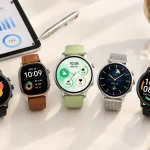
For pure calorie tracking during workouts, both form factors can deliver reliable trend data. The smartwatch offers richer detail and more activity-specific algorithms, while the band wins on battery life and all-day comfort. Choose the form factor based on how deeply you want to engage with the data from your activity tracker for calories burned.
Practical Tips to Maximize Your Calorie Tracking Accuracy
Even with the inherent accuracy limitations, you can improve the quality of your calorie data significantly:
- Keep your personal profile updated. Weight changes affect BMR calculations. Update your profile whenever your weight shifts by more than 2–3 kg.
- Wear the device snugly. A loose band causes gaps in heart rate readings, which directly degrades calorie accuracy on your fitness tracker with calories burned.
- Use sport-specific modes. Starting a tracked workout session activates higher-frequency sensor sampling and activity-specific algorithms.
- Wear it consistently. The more hours per day your device collects data, the more accurate your total daily expenditure figure becomes.
- Clean the sensors regularly. Sweat, sunscreen, and lotion can interfere with optical heart rate readings.
- Compare like with like. Use the same device and settings for trend comparisons. Switching devices mid-program introduces calibration differences.
These small habits compound over weeks and months, giving you a progressively more reliable picture of your energy expenditure from any fitness tracker with calories burned functionality.
The Evolution of Calorie Tracking Technology
The fitness tracker with calories burned has evolved dramatically over the past decade. Early devices relied solely on accelerometers and basic movement algorithms, producing rough estimates that often missed the mark entirely. Today’s advanced calorie and activity tracker devices incorporate sophisticated sensor fusion, machine learning algorithms, and continuous physiological monitoring to deliver increasingly refined estimates.
Modern smart watch calorie tracker devices now integrate blood oxygen monitoring, stress tracking, and recovery metrics alongside traditional calorie counting. These additional data points help users understand not just how many calories they burned, but how their body responded to the activity and how well they recovered. This holistic view transforms a simple fitness tracker with calories burned into a comprehensive health management platform.
Choosing the Right Activity Tracker for Calories Burned
The right device depends on your goals, budget, and how deeply you want to engage with the data. For general fitness enthusiasts, a band with a heart rate sensor and multi-sport modes covers the essentials. For athletes and data-driven users, a smartwatch with GPS, advanced metrics, and a robust companion app provides the depth needed to fine-tune training.
What matters most is not the exact calorie number — it is the habit of tracking, the awareness it builds, and the consistency it encourages. A fitness tracker with calories burned transforms your workout routine not by giving you perfect data, but by making you pay attention to the relationship between effort and output.
For teams sourcing fitness trackers at scale — whether for corporate wellness programs, retail distribution, or private-label brands — our fitness tracker lineup covers the core features discussed in this guide, with OEM and ODM customization options available. Each device in the lineup includes the heart rate monitoring, multi-sport tracking, and companion app integration that make a fitness tracker with calories burned genuinely useful for end users.