
- Why 2026 Is a Pivotal Year for Smartwatches
- Major Smartwatch Launches of 2026
- Breakthrough Health & AI Features in the Latest Smartwatches
- Regional Market Breakdown: Where Demand Is Growing Fastest
- How to Choose the Right New Smartwatch for Your Market
- OEM/ODM Sourcing: Building Your Own Smartwatch Brand
- Conclusion
Why 2026 Is a Pivotal Year for Smartwatches
The smartwatch category is entering its most dynamic phase yet. After a brief slowdown in 2024, global shipments rebounded strongly — 120 million units shipped through the first three quarters of 2025 alone, up 7.3% year on year. Heading into 2026, the newest smart watches are arriving with capabilities that would have seemed futuristic just two years ago: cuffless blood pressure monitoring, AI-driven health coaching, and multi-day battery life across every price tier.
For B2B buyers, retailers, and brand owners, understanding what is launching — and where demand is growing fastest — is essential for sourcing decisions and product planning. Every new smart watch generation brings improved sensors, longer battery life, and smarter software. This guide breaks down the major 2026 releases, the technology trends shaping the latest smartwatch innovations, and the regional market dynamics that matter most.
Major Smartwatch Launches of 2026
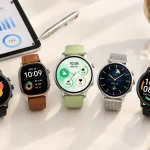
Every major player has refreshed its lineup this year. The newest smartwatch models from Apple, Samsung, Google, and emerging brands are pushing boundaries in health monitoring, AI integration, and design. Below is a summary of the most significant smartwatch new releases hitting shelves in 2026.
Apple Watch Series 11, Ultra 3 & SE 3
Apple leads with a three-pronged strategy. The Apple Watch Series 11 adds FDA-cleared hypertension notifications, 5G connectivity, and improved scratch resistance. The Ultra 3 targets extreme-sports users with enhanced GPS accuracy and a brighter display. Meanwhile, the SE 3 brings core health features — including sleep apnea detection — to a more accessible price point, making it an ideal entry device for first-time buyers. For anyone evaluating the newest smart watches in the premium segment, Apple’s lineup sets the benchmark for health feature depth.
Samsung Galaxy Watch 8
Samsung’s flagship introduces Galaxy AI-powered coaching for running and sleep, antioxidant testing, and vascular load measurements for arterial health assessment. A thinner frame and improved battery life round out the upgrades. Samsung’s blood pressure monitoring feature received FDA clearance and began its U.S. rollout in March 2026 — a milestone for wearable cardiovascular health. This new smartwatch from Samsung represents the most clinically capable wearable the company has shipped to date.
Google Pixel Watch 4
Google’s latest smartwatch features a redesigned curved display under domed glass, Gemini AI voice integration with Raise-to-Talk gestures, and Fitbit-powered health metrics including Readiness Score and Cardio Load. It is also the first Google smartwatch designed for user-repairable battery and display swaps — a significant step for sustainability and long-term cost of ownership. Among the smartwatch new arrivals this year, the Pixel Watch 4 stands out for its repairability story.
Huawei, Xiaomi, Worldwell & Garmin: Strong Contenders
Beyond the Big Three, several brands are pushing the newest smartwatch category forward with aggressive pricing and feature-rich designs:
- Huawei Watch Fit 5 Pro — Flagship health sensors in a slim square design, targeting users who want premium features without bulk.
- Xiaomi Watch S5 — Sapphire glass, titanium bezel, ECG, dual-band GPS, and 10-day battery life at approximately $290 — a new smart watch that undercuts many flagship rivals on price.
- Garmin Venu 4 — Body Battery energy monitoring, advanced recovery tracking, and multi-sport GPS for serious athletes.
- Motorola Moto Watch — Starting around $100 with IP68 rating, 13-day battery, and Moto AI integration — a strong budget contender in the new smartwatch space.
- Worldwell‑WS026 — AMOLED GPS Smart Watch for Women with Bluetooth Calling & Health Tracking. It features a 41–43mm AMOLED display (466×466 resolution), alloy case, silica gel band and 3 ATM waterproof rating. Backed by rigorous quality control, it delivers core health functions including blood oxygen, heart rate, menstrual management, and sleep tracking.
Breakthrough Health & AI Features in the Latest Smartwatches
The smart watch latest models share a common theme: health monitoring is moving from reactive to predictive. Here are the capabilities defining the 2026 lineup and setting the newest smart watches apart from previous generations.
Cuffless Blood Pressure & ECG Monitoring
Perhaps the most significant leap is cuffless blood pressure tracking. Samsung’s pulse wave analysis technology — now FDA-cleared — estimates systolic and diastolic readings using only the watch’s optical sensors, with calibration via a traditional cuff every 28 days. Apple’s Series 11 offers hypertension notifications that alert users to potential high blood pressure patterns. These features transform the new smartwatch from a fitness tracker into a genuine cardiovascular screening tool. For the latest smartwatch buyers, clinical-grade health monitoring is now table stakes rather than a differentiator.
AI-Powered Health Coaching
Artificial intelligence is the connective tissue across 2026 launches. Samsung’s Galaxy AI analyzes sleep, activity, and recovery data to generate personalized coaching. Google’s Gemini integration lets users ask health questions via natural voice commands. Garmin’s Body Battery synthesizes HRV, stress, and sleep into a single readiness score. The result: a new smart watch that does not just collect data — it interprets it and acts on it. This AI layer is what makes the newest smartwatch generation genuinely smarter than its predecessors, and it is reshaping what consumers expect from a new smartwatch at every price point.
Battery Life & Display Upgrades
Multi-day battery life is no longer a premium-only feature. Dual-CPU architectures and more efficient AMOLED panels are enabling 5–13 day runtimes across price tiers. AMOLED displays captured 68.46% of smartwatch shipments in 2025, with Micro-LED technology projected to grow at a 9.21% CAGR through 2031. Brightness levels now exceed 3,000 nits on mid-range models, ensuring readability in direct sunlight. These display and power improvements benefit every new smart watch on the market, from budget bands to premium flagships. The smart watch latest technology in display efficiency means that even a fashion smart watch can now offer both style and all-day performance without compromise.
Regional Market Breakdown: Where Demand Is Growing Fastest
The global smartwatch market was valued at $38.53 billion in 2025 and is projected to reach $44.28 billion in 2026, growing at a 15.68% CAGR through 2034, according to Fortune Business Insights. But growth is far from uniform across regions — and understanding these dynamics is critical for anyone sourcing or selling the latest smartwatch products.
North America: Ecosystem Lock-In
North America held 38.81% of global smartwatch market share in 2025, driven by Apple’s ecosystem dominance and strong consumer willingness to pay for premium health features. The U.S. market alone is expected to reach $20.87 billion by 2032. FDA clearances for blood pressure and hypertension features are accelerating replacement cycles, as consumers upgrade to access clinical-grade monitoring on their wrists. For B2B buyers targeting this market, the newest smart watches with FDA-cleared health features command the highest margins.
Asia-Pacific: Volume & Value Growth
Asia-Pacific accounts for roughly 40% of global smartwatch shipments and is the fastest-growing region. China’s market shipped 17.6 million units in Q1 2025 alone — up 37.6% year on year — boosted by government subsidies and aggressive pricing from Huawei and Xiaomi. India’s market is projected to reach $5.73 billion by 2026. The region’s demand skews toward value-oriented models, with strong growth in sub-$200 devices. A new smart watch priced competitively with solid health features can capture significant volume here. The newest smartwatch demand in this region is driven by younger, tech-savvy consumers who want the latest features at accessible prices.
Europe: Regulatory-Driven Innovation
European buyers prioritize medical-grade accuracy and data privacy. The EU’s Medical Device Regulation (MDR) is pushing manufacturers to obtain clinical certifications before marketing health features — a barrier that also serves as a competitive advantage for brands that clear it. Hybrid smartwatches like the Withings ScanWatch Light, which blend traditional watch aesthetics with health sensors, perform particularly well in this market. The latest smartwatch models targeting Europe must balance innovation with regulatory compliance, and brands that invest early in MDR certification gain a meaningful edge.
How to Choose the Right New Smartwatch for Your Market
Whether you are a retailer planning inventory or a brand owner evaluating product specifications, the following comparison framework helps narrow the field when selecting the newest smart watches for your target audience:
| Selection Criteria | What to Evaluate | 2026 Benchmark |
|---|---|---|
| Health Sensors | HR, SpO2, ECG, blood pressure, sleep apnea | ECG and BP monitoring now available under $300 |
| Battery Life | Typical usage duration per charge | 5–13 days for mid-range; 1–2 days for full-smart models |
| Display | AMOLED vs. LCD, brightness, durability | AMOLED dominant; 3,000+ nits on mid-range |
| Connectivity | Bluetooth, Wi-Fi, 4G/5G, NFC | Bluetooth-only holds 62.67% share; 5G growing at 7.96% CAGR |
| Water Resistance | IP rating for daily use and sports | IP68 standard across most tiers |
| OS Ecosystem | watchOS, Wear OS, HarmonyOS, proprietary | watchOS leads at 29.12% share; HarmonyOS growing at 8.01% CAGR |
| Design & Materials | Case material, band options, form factor | Titanium, sapphire glass trickling to mid-range |
Data sources: Counterpoint Research, Mordor Intelligence, and manufacturer specifications.
Fashion Meets Function
For buyers targeting the style-conscious segment, a fashion smart watch design — slim profile, premium materials, interchangeable bands — can differentiate in markets where aesthetics drive purchase decisions as much as specs. The women’s smartwatch segment is growing rapidly, with brands launching smaller case sizes (35–40mm) and jewelry-inspired designs. A new smartwatch that looks like a traditional timepiece while delivering full health tracking appeals to consumers who refuse to compromise on style. The newest smartwatch designs increasingly blur the line between wearable technology and fashion accessory, and the smart watch latest collections from major brands now routinely feature premium materials like titanium and sapphire glass even in mid-range models.
OEM/ODM Sourcing: Building Your Own Smartwatch Brand
For B2B buyers looking to launch or expand a private-label smartwatch line, China’s manufacturing ecosystem offers significant advantages. Guangdong province, in particular, hosts a dense cluster of OEM/ODM factories capable of producing IP68-rated smartwatches with AMOLED displays, Bluetooth calling, heart rate and blood oxygen monitoring, and AI voice assistant integration — all with private mold options. Whether you want to build a rugged fitness tracker or a sleek fashion smart watch, the supply chain is mature enough to support both.
Key considerations when sourcing a new smart watch from an OEM partner:
- Minimum order quantities — Most established factories require 500–1,000 units per SKU for private mold projects.
- Certification support — Ensure your supplier can provide CE, FCC, RoHS, and IP68 test reports.
- Sensor accuracy — Request calibration data and sample testing before committing to volume orders.
- Software customization — Confirm the firmware supports your branding, app integration, and OTA update requirements.
- Lead times — Typical production cycles range from 30–45 days after sample approval.
For teams ready to explore OEM/ODM smartwatch options, WorldWell’s smart watch catalog covers a range of models from women’s AMOLED fashion watches to rugged fitness-focused designs — all with factory-direct pricing and global logistics support.
Conclusion
The newest smartwatch landscape of 2026 represents a clear inflection point. Health monitoring has crossed from novelty to clinical utility, AI is making wearable data actionable, and battery life expectations have shifted permanently upward. Regionally, Asia-Pacific is driving volume growth while North America leads in premium feature adoption.
For B2B professionals — whether sourcing for retail, building a private label, or evaluating market entry — the opportunity is substantial. The brands that win in 2026 and beyond will be those that combine credible health sensors, thoughtful design, and competitive pricing. Whether you are evaluating the latest smartwatch from a major brand or developing a new smartwatch under your own label, understanding the market landscape outlined above is the first step toward making informed decisions in a category projected to exceed $140 billion by the mid-2030s. The newest smart watches of 2026 are not just incremental upgrades — they represent a fundamental shift in what wearable technology can deliver, and every new smart watch released this year raises the bar for what buyers and consumers expect next.