
2026 Market Overview — A Billion-Dollar Category
The latest smart ring news tells a story of rapid, category-defining transformation. The global smart ring market, valued at approximately USD 697.6 million in 2025, is expected to cross the USD 1 billion threshold in 2026 and reach USD 7.8 billion by 2035, expanding at a CAGR of 25.4% according to Global Market Insights.
This is no longer a niche gadget segment. Smart rings recorded 88% shipment growth in 2024 — the fastest expansion of any wearable category — and followed up with an estimated 49% shipment increase in 2025, far outpacing the 6% gain posted by smartwatches. Major brands including Samsung, Apple (with a rumored late-2026 entry), and established players like Oura and Ultrahuman are pouring resources into the space.
For B2B buyers, sourcing teams, and wearable technology strategists, this wearable ring news signals a market entering its mainstream phase. The smart ring news cycle in 2026 is dominated by three forces: advanced biometric sensing, NFC-driven payments and access, and AI-powered personalization. Below, we break down the product launches, technology breakthroughs, and regional opportunities defining smart rings 2026.
New Product Launches Reshaping the Category
Every quarter in 2025–2026 has brought a wave of smart ring new product announcements. Each new smart ring entering the market pushes the category forward on features, comfort, and price accessibility. Here are the launches that matter most:
- Samsung Galaxy Ring — Samsung’s debut smart ring brought the category into the consumer mainstream. Crafted from titanium and weighing just 2.3–3 g, it integrates tightly with the Samsung Health ecosystem and offers sleep tracking, heart rate monitoring, and SpO₂ measurement. This new smart ring from Samsung validated the entire category for mainstream consumers.
- Oura Ring 4 Ceramic — Oura expanded its lineup with a ceramic edition and launched an AI-powered women’s health model in early 2026. The brand also secured a USD 96 million U.S. Department of Defense contract, underscoring growing institutional trust in ring-based biometrics. As the market leader, every Oura smart ring news update moves the entire industry.
- Ultrahuman Ring Air — A subscription-free model that helped Ultrahuman grow revenue 5.4× in 2025 to USD 64 million. Its no-monthly-fee approach has resonated strongly with cost-conscious buyers, making it one of the most talked-about smart ring new product stories of the year.
- RingConn Gen 2 Air — Positioned as one of the most affordable full-featured options, with comprehensive health tracking and no subscription costs. This new smart ring targets buyers who want premium features without premium pricing.
- Worldwell WR005— Launched as a waterproof health-focused smart ring, the WR005 features a stainless steel body, 5ATM water resistance, and built-in biometric sensors for sleep tracking, heart rate monitoring, and blood oxygen measurement. Designed for daily wear and health-conscious users, it represents a cost-effective factory-direct option in the mid-range smart ring segment.
The wearable ring news pipeline for the rest of 2026 remains packed, with Apple’s rumored entry expected to trigger a massive wave of mainstream adoption through ecosystem lock-in.
Key Technology Innovations
The smart ring news landscape in 2026 is defined by five major technology shifts. Each innovation opens new use cases and new market segments for buyers and brands.
Advanced Biometric Sensors
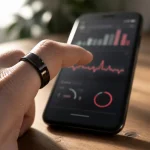
Modern smart rings now pack multiple biometric sensors into a form factor barely thicker than a traditional band. Current-generation devices measure heart rate, blood oxygen (SpO₂), skin temperature, and sleep stages continuously. Some smart rings 2026 models are adding non-invasive blood pressure estimation and stress tracking via heart-rate variability analysis.
Industry data shows that over 57% of new devices now integrate multi-sensor biometric chips measuring heart rate, SpO₂, and temperature simultaneously — a significant jump from single-function early models. This sensor density is what makes each new smart ring generation measurably more valuable to health-conscious consumers.
AI-Powered Health Coaching
The biggest shift in smart ring news for 2026 is the move from raw data to actionable insight. AI-driven algorithms now deliver personalized health recommendations, not just metrics.
Oura’s women’s health AI model, launched in March 2026, provides cycle predictions and wellness insights tailored to individual patterns. Ultrahuman’s platform offers real-time metabolic and recovery coaching. The trend across smart rings 2026 is clear: rings are evolving from passive trackers into proactive health advisors. Every major smart ring new product launch now features AI as a headline capability.
NFC Payments & Access Control
NFC-enabled rings now account for roughly 53.9% of the market in 2026. Users can tap to pay at any contactless terminal, unlock office doors, or board transit — all without reaching for a phone or wallet. This capability has turned the smart ring into a genuine replacement for physical cards and badges.
For enterprise buyers, NFC smart rings offer a compelling alternative to traditional access badges. They cannot be forgotten (you always wear a ring), they are harder to clone, and they support encrypted authentication protocols such as NTAG215. The wearable ring news around NFC adoption shows enterprise demand accelerating, particularly in financial services and tech campuses.
Premium Materials & Durability
Approximately 46% of manufacturers are shifting toward titanium and ceramic constructions, improving durability by nearly 39% compared to earlier polymer-based models. These materials also deliver the premium look and feel that consumers expect from a wearable they never take off. The latest smart ring news on materials shows ceramic and titanium becoming the default choices for any smart ring new product targeting the premium segment.
Battery Life & Charging
Battery life remains a key differentiator. Most smart rings 2026 deliver 4–10 days per charge, enabled by low-power chipsets and optimized firmware. Wireless charging has become standard, eliminating the need for fiddly proprietary cables. For buyers evaluating each new smart ring on the market, battery endurance is consistently ranked among the top three purchase criteria.
Smart Rings and the Connected Home
Among the most interesting ring smart home news developments is the ring’s evolution from standalone wearable to connected-home hub. The latest ring smart home news shows smart rings being integrated with Matter-compatible devices, enabling seamless control of lights, locks, thermostats, and security systems.
Smart rings can now serve as personal authentication keys for smart locks, trigger personalized lighting and temperature profiles when you enter a room, and control IoT devices through gesture recognition. As Matter and other interoperability standards mature, expect rings to play a larger role in the broader smart-home ecosystem — particularly in premium residential and commercial settings. This ring smart home news trend is especially relevant for property developers and facility managers looking to differentiate their offerings.
The convergence of wearable ring news and smart-home integration also opens B2B opportunities: hospitality groups, co-working spaces, and senior-living facilities are all exploring ring-based access and monitoring solutions.
Competitive Landscape
| Brand | Market Share (H1 2025) | Key Differentiator |
|---|---|---|
| Oura | 74% | Clinical-grade sleep & recovery insights; DoD contract |
| Ultrahuman | 9% | No subscription fee; 5.4× revenue growth in 2025 |
| Samsung | 9% | Galaxy ecosystem integration; premium titanium build |
| RingConn | 5% | Affordable full-feature ring; Gen 2 Air launch |
| Others (Circular, Noise, boAt, Zepp) | 3% | Regional specialization; budget-friendly options |
Source: Omdia Smart Ring Tracker, H1 2025 (via Informa Tech)
The market is consolidating around a few dominant players, but the competitive field is widening. Samsung’s entry validated the category for mainstream consumers, while Ultrahuman’s subscription-free model proved that recurring fees are not inevitable. For brands watching smart ring news, the takeaway is that differentiation — through materials, AI features, or regional focus — is the path to gaining share against Oura’s dominance.
Regional Market Opportunities
| Region | 2025 Market Size | 2026 Estimate | Key Growth Drivers |
|---|---|---|---|
| North America | USD 188.1 M (45.1% share) | USD 237.6 M | Early adoption, digital-health reimbursement, strong brand presence |
| Europe | USD 215.5 M | USD 269 M (est.) | Health-conscious consumers; U.K. (~USD 24.6 M) and Germany (~USD 19.2 M) lead |
| Asia Pacific | USD 161.5 M (30.1% share) | USD 204 M (est.) | Manufacturing scale in China; Samsung in Korea; aging population in Japan |
| Middle East & Africa | USD 27.7 M | USD 33.4 M | Rising disposable income in UAE and Turkey; luxury & health wearables demand |
Regional data compiled from Fortune Business Insights and Global Market Insights reports (2025–2026)
North America remains the largest market, driven by strong consumer spending on wearable technology and established digital-health infrastructure. Asia Pacific is the fastest-growing region at a CAGR of 26.3%, fueled by large-scale manufacturing in China and South Korea that lowers production costs and broadens affordability. Europe holds steady with mature demand in the U.K. and Germany. The Middle East & Africa is an emerging opportunity, with the UAE and Turkey leading adoption.
For sourcing teams following wearable ring news, the Asia Pacific manufacturing advantage is particularly significant: China’s production scale means OEM and ODM partners can deliver competitive pricing without sacrificing quality, making it the ideal base for brands targeting global markets.
What These Trends Mean for Buyers & Brands
For B2B buyers and emerging brands, the smart ring news landscape points to several strategic priorities:
- White-label opportunity is wide open. With Oura’s dominance declining (from near-monopoly to 74%), there is room for OEMs and ODMs to capture share with differentiated smart ring new product lines.
- Feature-price balance wins. The most successful smart rings 2026 launches combine advanced biometric sensors, NFC payments, and premium materials at accessible price points — without mandatory subscription fees.
- E-commerce is the growth channel. Online sales are expected to grow at a 36.7% CAGR through 2034, making digital-first go-to-market strategies essential for any new smart ring brand.
- Regional customization matters. Asia Pacific buyers prioritize affordability and manufacturing partnerships; North American buyers value ecosystem integration and clinical-grade accuracy; European buyers look for design quality and regulatory compliance.
- Smart-home integration is the next frontier. Brands that position their smart ring products as connected-home devices — not just health trackers — will unlock new buyer segments in property management, hospitality, and enterprise security.
Conclusion
The smart ring category has crossed from novelty to necessity. With a market projected to exceed USD 1 billion in 2026 and grow toward USD 7.8 billion by 2035, the opportunities for brands, buyers, and technology partners are substantial.
Whether you are entering the market with a new product line or expanding an existing wearable portfolio, success in 2026 and beyond will depend on three things: innovation in health sensing and AI, quality manufacturing, and smart regional positioning.
The smart ring news cycle will only accelerate as Apple enters the market and AI capabilities deepen. Brands that move now — with the right product mix, the right manufacturing partner, and the right regional strategy — will be best positioned to capture share in what is becoming one of the fastest-growing segments in consumer technology.
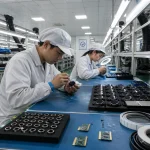
Equipped to assist teams exploring smart‑ring development and component sourcing, our comprehensive suite of smart‑ring solutions caters to every requirement. Available form‑factors include alloy‑constructed and ceramic bodies, as well as stainless‑steel variants equipped with OLED touchscreens and 5‑ATM waterproof capability. All OEM‑ODM bespoke modification services are enabled via our factory‑direct supply infrastructure.