
What is a Smartwatch?
Definition of a Smartwatch
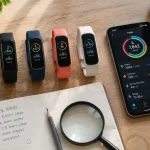
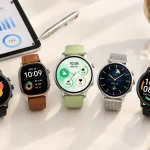
A smartwatch is a wearable computing device worn on the wrist, designed to merge traditional timekeeping with advanced digital functionality. Unlike conventional analog or digital watches, modern smartwatches leverage cutting-edge smartwatch sensor technology, embedded operating systems, and wireless connectivity to deliver real-time data tracking, smart notifications, and interactive features. As the core hardware support of these intelligent functions, high-precision sensors in smartwatch are the fundamental reason why smartwatches far outperform traditional watches. As a core product of the wearable tech industry, smartwatches have evolved from niche tech gadgets to mainstream daily essentials, and most users are curious about what can a smartwatch do to upgrade their daily fitness and lifestyle.
According to authoritative market data from Future Market Reports, the global smartwatch sensor market reached USD 12.5 billion in 2024 and is projected to grow at a 10.5% CAGR through 2032, reflecting the rapid iteration and popularization of professional smartwatch sensor technology across consumer electronics.
Description of Smart Watch Characteristics
Modern smartwatches feature four defining characteristics that distinguish them from basic fitness trackers and traditional watches. First, they adopt miniaturized MEMS sensor hardware, which accounts for over 72% of all wearable sensor deployments, delivering high-precision data collection with ultra-low power consumption (360 Research Reports). These optimized sensors in smartwatch ensure stable and accurate monitoring in all daily and sports scenarios.
Second, they support multi-device wireless connectivity, enabling seamless linkage with smartphones and smart home devices. Third, smartwatches feature interactive touchscreen displays and customizable operating systems, supporting third-party app adaptation and personalized settings. Fourth, they prioritize long-duration wearable adaptability, with lightweight body designs, waterproof and dustproof capabilities, and all-day battery endurance. These core characteristics fully expand the scope of what can a smartwatch do, covering fitness tracking, health monitoring and intelligent life assistance.
Core Components of a Smart watch
The powerful performance of smart watches relies on a complete set of integrated hardware components. Among them, sensors in smartwatch serve as the core perception layer and the core carrier of smartwatch sensor technology, while display modules, power systems, and processing chips form the functional support layer. Below is a detailed breakdown of key components and their operational principles, with a professional comparison of mainstream smartwatch sensors.
Sensors in Smartwatch
Sensor technology is the cornerstone of all smart watch functions. Advanced smartwatch sensor technology enables devices to capture human body data, motion status, and environmental changes in real time. Multi-sensor integration can improve overall data accuracy by 25% to 35%, effectively reducing monitoring errors caused by single-sensor limitations (360 Research Reports). The four most essential sensors in smartwatch for mainstream wearable devices are as follows:
Accelerometer
A three-axis accelerometer is a basic motion sensor built into nearly all smartwatches. It captures subtle acceleration changes in three spatial dimensions to identify user movements, including walking, running, jumping, and sedentary states. This sensor is responsible for core motion tracking functions such as step counting, calorie calculation, and activity duration statistics. With ultra-low power consumption design, it can maintain 24-hour continuous monitoring without excessive battery drain, which is one of the most practical functions answering what can a smartwatch do for daily fitness tracking.
Heart Rate Monitor
Most modern smart watches adopt PPG (Photoplethysmography) optical heart rate sensors. According to a PMC medical research study, calibrated wearable PPG sensors can achieve up to 99% heart rate monitoring accuracy, comparable to professional clinical monitoring equipment. The sensor emits low-energy green and infrared light to penetrate wrist skin, captures blood vessel dilation and contraction changes with heartbeat, and converts optical signals into real-time heart rate data. In 2025, 67% of newly released smartwatch models are equipped with upgraded heart rate and blood oxygen dual monitoring sensors (SQ Magazine), further optimizing smartwatch sensor technology for health management.
GPS
Built-in independent GPS modules enable smartwatches to record outdoor motion trajectories without relying on smartphone signals. It supports precise positioning for running, hiking, cycling, and open-water sports, accurately calculating exercise distance, speed, and altitude changes. High-end smartwatches adopt multi-satellite positioning systems (GPS/GLONASS/GALILEO) to improve positioning accuracy in complex environments such as forests and urban high-rise areas, making outdoor sports tracking one of the core advantages of sensors in smartwatch.
Temperature & SpO2 Sensors
Premium smartwatches are equipped with body temperature and blood oxygen sensors, supporting 24-hour body temperature tracking and real-time blood oxygen saturation detection. These sensors assist users in monitoring physical recovery status, sleep quality, and potential physical abnormalities, expanding the health management boundary of wearable devices and enriching the practical answers to what can a smartwatch do for personal wellness protection.
Smartwatch Core Sensor Parameter Comparison Table
| Sensor Type | Core Function | Working Principle | Accuracy Level | Power Consumption |
| Accelerometer | Motion detection, step counting, activity recognition | Captures 3D acceleration changes to identify user movement status | 95%+ daily activity accuracy | Ultra-low (continuous all-day monitoring) |
| Heart Rate Monitor (PPG) | Real-time heart rate & HRV tracking | Optical sensing of blood flow vibration via wrist penetration | 98%-99% clinical-level accuracy | Low (adjustable sampling frequency) |
| GPS Module | Outdoor positioning, trajectory & distance recording | Multi-satellite signal reception and spatial positioning calculation | Meter-level positioning accuracy | Medium (only activated during sports) |
| SpO2 & Temperature Sensor | Blood oxygen & body temperature monitoring | Infrared light absorption detection & thermal induction | 96%+ daily health monitoring accuracy | Ultra-low (timed sampling) |
Display Technology
Smart watches mainly adopt IPS and AMOLED mini touch screens, featuring high resolution, high color reproduction, and low power consumption. Most mainstream models support adaptive brightness adjustment, ensuring clear display under strong outdoor sunlight and dark indoor environments. The touch interactive design supports sliding, clicking, and long-press operations, realizing human-computer interaction functions such as function switching and data viewing, perfectly matching the diverse monitoring capabilities brought by advanced smartwatch sensor technology.
Power Source
Smartwatches use miniaturized lithium batteries, matched with low-power chip and sensor optimization technology. Ordinary models support 3-7 days of daily use, while low-power versions can achieve 10-15 days of ultra-long standby. Most modern smartwatches adopt magnetic suction fast charging technology, which avoids interface wear and improves charging convenience, fully adapting to 24-hour wearable scenarios and long-term continuous work of sensors in smartwatch.
How Does a Smartwatch Work?
Connectivity Features
Smartwatches rely on wireless connectivity technology to realize intelligent linkage and data transmission. Mainstream devices are equipped with Bluetooth 5.0 and above modules, supporting stable connection with smartphones for real-time synchronization of health data, message notifications, and sports records. High-end models also support Wi-Fi and NFC functions, realizing network independent operation and contactless payment.
All biometric and motion data collected by professional sensors in smartwatch is transmitted to the built-in processor through wireless signal transmission, and synchronized to mobile terminal APPs for long-term data storage and trend analysis, forming a complete closed loop of data collection-processing-storage-viewing, which is the core working logic supporting all functions that answer what can a smartwatch do.
Processing Power and Operating System
Smart watches are equipped with dedicated low-power wearable processors, which are optimized for miniaturized devices to balance performance and power consumption. The built-in lightweight operating systems are compatible with Android and iOS mobile systems, supporting system adaptation, function expansion, and firmware upgrade. The processor is the core control center of the smartwatch, responsible for analyzing data captured by smartwatch sensor technology, responding to user operations, and controlling all hardware modules to work collaboratively.
According to industry data, multi-sensor collaborative processing technology can effectively filter motion noise and water flow interference, greatly improving the stability of smartwatch data monitoring in sports and outdoor scenarios .
User Interaction and Touchscreen Functionality
User interaction is realized through high-sensitivity touch screens, physical buttons, and gesture sensing. Users can switch functional interfaces, view real-time health data captured by sensors in smartwatch, adjust device settings, and control smart functions through screen touch operations. In addition, smartwatches support intelligent gesture recognition, such as lifting the wrist to light up the screen and flipping the wrist to mute reminders, bringing convenient and intuitive operation experience.
What Can a Smartwatch Do?
Most users purchase smartwatches to solve daily life and health management pain points. A comprehensive answer to what can a smartwatch do covers health tracking, intelligent life, and sports recording scenarios, all powered by mature smartwatch sensor technology. Industry surveys show that 82% of users regard health and fitness tracking as the most core smartwatch function, while 79% of users value message notification and reminder functions (SQ Magazine).
Health and Fitness Tracking
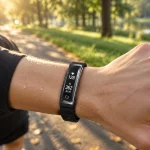
Driven by mature smartwatch sensor technology, smartwatches achieve all-round body status monitoring. It supports 24-hour real-time heart rate and HRV tracking, blood oxygen detection, body temperature monitoring, and sleep stage analysis, helping users grasp sleep quality and physical recovery status. In terms of fitness management, it records daily steps, calorie consumption, and multiple sports data such as running, swimming, cycling, and hiking, relying on high-precision sensors in smartwatch to generate professional sports reports and assist users in formulating scientific fitness plans.
For long-term health management, smartwatches can also monitor stress levels, remind sedentary and drinking water, and support female physiological cycle management, realizing whole-scenario health protection for daily life and enriching the core value of what can a smartwatch do for users of all ages.
Notifications and Alerts
Smart watches synchronize mobile phone real-time information, including incoming call reminders, SMS messages, and social software notifications such as WhatsApp, Facebook, and Skype. Users can view message content and answer/reject calls directly on the watch, avoiding missing important information when the mobile phone is inconvenient to carry. Meanwhile, it supports customized alarm clocks, schedule reminders, and exercise goal reminders, improving daily life and work efficiency, which is one of the most commonly used non-health functions of smartwatches.
Music and Media Control
Most smart watches support local music playback and Bluetooth headphone linkage. Users can control music switching, pause, and volume adjustment through the watch during sports, running, and outdoor activities without operating the mobile phone. Some models also support remote camera control, making outdoor selfies and group photos more convenient, further expanding the diverse application scope of what can a smartwatch do in daily entertainment and outdoor scenarios.
Future of Smart Watches
Emerging Technologies
With the continuous upgrading of smartwatch sensor technology, the future development of smartwatches will focus on medical-grade precision monitoring and intelligent scenario adaptation. According to Future Market Reports, the global smartwatch sensor market will reach USD 28.7 billion by 2032, driven by iterative upgrades of biometric sensors in smartwatch.
Emerging technologies such as non-invasive blood sugar monitoring, blood pressure accurate detection, and AI intelligent health analysis will be gradually popularized in consumer-grade smartwatches. In addition, low-power AI algorithms will further improve sensor data accuracy, realizing early warning and prediction of potential health risks, upgrading smartwatches from data recording tools to professional health management assistants, and continuously enriching the functional answers to what can a smartwatch do.
Integration with Other Devices
Future smart watches will build a more complete smart wearable ecosystem, realizing seamless interconnection with smart phones, smart home devices, sports equipment, and vehicle systems. Through data linkage, it can synchronize user health status and exercise habits captured by sensors in smartwatch to multiple smart terminals, realizing scenario-based intelligent linkage such as home environment adjustment and sports data synchronization analysis.
With the continuous expansion of the wearable device market, smart watches will become the core entrance of personal smart health data, providing continuous and accurate data support for personalized health management and intelligent life.
Conclusion
In essence, the powerful functions of modern smart watches all stem from mature and iterative smartwatch sensor technology. Professional, high-precision sensors in smartwatch cooperate with processors, operating systems, and wireless connectivity systems to realize diverse functions covering health monitoring, sports recording, and intelligent life assistance.
For ordinary consumers, the question of what can a smartwatch do is no longer limited to simple time display and step counting. It has evolved into an all-round wearable device that integrates professional health management, efficient life assistance, and personalized sports tracking. With the continuous innovation of sensor technology and intelligent algorithms, smartwatches will continue to break functional boundaries and become an indispensable core device in personal smart life and health management.