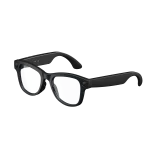

The evolution of wearable technology has reached a critical inflection point where high-performance computing, advanced optics, and artificial intelligence converge into a single, unobtrusive form factor: Smart Glasses. Unlike head-mounted displays designed for immersive virtual reality, smart glasses prioritize ambient intelligence—the seamless overlay of digital information onto the physical world.
Achieving this requires solving some of the most complex engineering puzzles in modern hardware design.
1. The Optical Engine: From Reflection to Waveguides
The most significant technical hurdle in smart glasses is the Combiner—the component that merges digital light with ambient environmental light. Traditional “Birdbath” optics, which use curved mirrors to reflect imagery, are being phased out in favor of Optical Waveguides.
- Geometric Waveguides: These utilize a series of semi-reflective prisms embedded within a glass substrate to guide light to the eye. They offer superior color fidelity but are notoriously difficult to manufacture at scale.
- Diffractive Waveguides: Leveraging Surface Relief Gratings (SRG), these lenses use nano-scale structures etched onto the glass to manipulate light waves via diffraction. This allows for a lens as thin as a standard prescription glass, though it introduces challenges like “rainbow artifacts” and light leakage.
2. Micro-Display Technologies: The Search for Infinite Brightness
Because smart glasses are intended for use in diverse lighting conditions—from dim offices to direct sunlight—the display source must achieve extreme luminance.
The industry is shifting toward Micro-LED (μLED). Unlike OLED, Micro-LEDs are inorganic and can produce millions of nits of brightness while consuming significantly less power. This efficiency is vital because the thermal envelope of a spectacle frame is extremely limited; any excess heat directly impacts user comfort.
3. The Sensory Loop: Multimodal AI at the Edge
For smart glasses to be “smart,” they must perceive the environment in real-time. This involves a sophisticated sensor suite:
- Computer Vision: Ultra-low-power CMOS sensors capture visual data, which is processed by on-device Neural Processing Units (NPUs) to recognize objects, text, or human gestures.
- Spatial Audio: Beam-forming microphone arrays isolate user speech from background noise, enabling high-accuracy voice command interfaces even in crowded environments.
- SLAM (Simultaneous Localization and Mapping): Integrated IMUs (Inertial Measurement Units) work with visual data to anchor digital content to specific physical locations, ensuring that a navigation arrow stays fixed on a street corner as the user moves.
4. The Engineering Constraint: The Power-Weight Paradox
The ultimate goal of smart glasses is “All-Day Wearability.” This creates a brutal trade-off:
- Battery Density: Increasing battery life usually increases weight, which causes nasal bridge fatigue.
- Thermal Management: Processing AI locally generates heat. Without active cooling (fans), the frames must use advanced materials like magnesium alloys or graphene-enhanced plastics to dissipate heat passively.
- Communication Latency: To offload heavy computation to a smartphone or the cloud, smart glasses rely on high-bandwidth, low-latency protocols like Wi-Fi 7 or specialized Bluetooth sub-bands.
The Future: Addressing the VAC Conflict
One of the remaining frontiers in smart glasses research is the Vergence-Accommodation Conflict (VAC). This occurs when the eyes strain because the digital image is at a fixed focal distance while the physical object is at another. Future iterations are exploring Varifocal Optics and Holographic Displays to create multiple focal planes, mimicking natural human vision and eliminating eye strain.
Conclusion
Smart glasses represent the pinnacle of miniaturization. By moving the interface from the pocket to the line of sight, they transform the internet from a destination we visit into a layer of reality we inhabit. The transition from “wearable gadget” to “essential tool” will be defined not by a single breakthrough, but by the incremental mastery of nanophotonics and edge-AI efficiency.